Demographic Patterns Reveal Distinct Game Selection Trends in Expanding Online Markets
Drew Butler · Oct 3, 2026
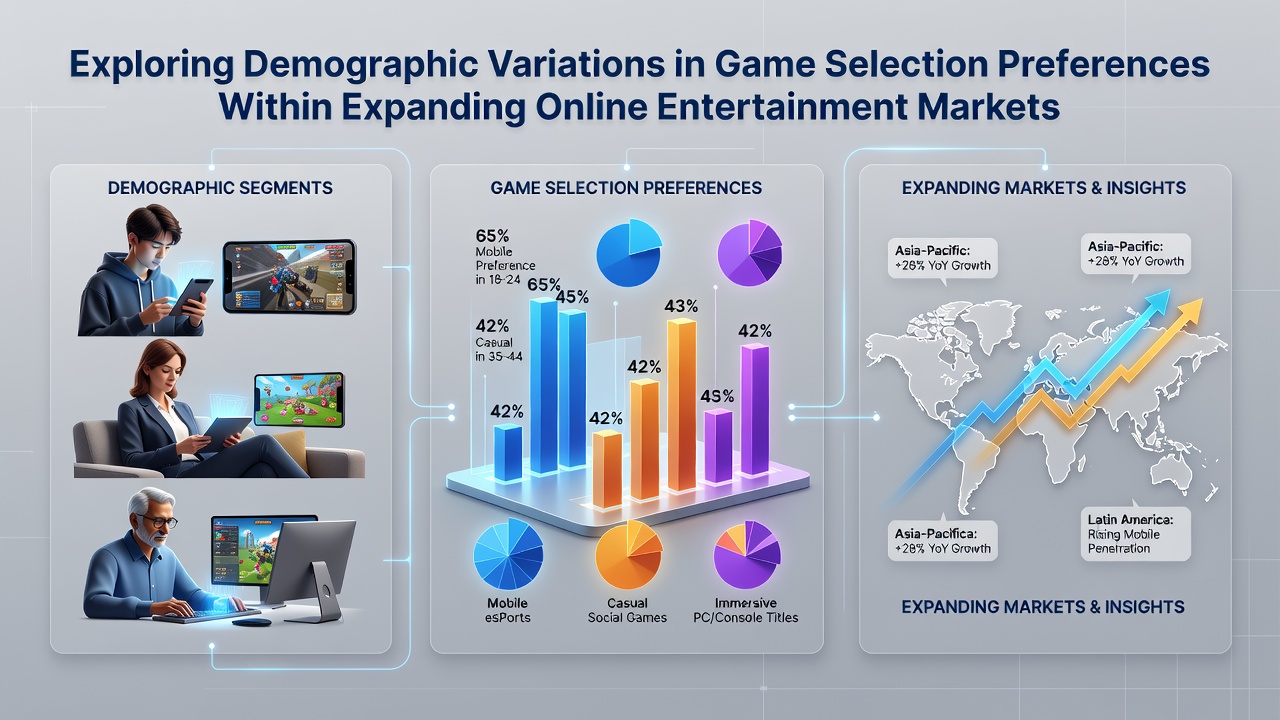
Demographic Patterns Reveal Distinct Game Selection Trends in Expanding Online Markets
Online entertainment platforms continue to expand rapidly through 2026, and data collected across multiple regions shows clear variations in game selection tied to age, gender, location, and income levels. Researchers tracking user behavior note that these patterns emerge consistently in regulated markets where platforms record detailed demographic information alongside gameplay logs.
Age groups demonstrate some of the most pronounced differences. Players aged 18 to 34 gravitate toward fast-paced titles such as crash games, live dealer variants, and progressive slot formats that feature frequent bonus rounds. In contrast, individuals between 35 and 54 show stronger engagement with table games including blackjack and roulette, often selecting versions that allow longer sessions with strategic decision points. Those over 55 display higher participation rates in classic slot machines and bingo-style offerings that emphasize steady pacing and familiar mechanics.
Gender-Based Preferences Surface in Platform Analytics
Gender data collected from major operators indicates measurable divides in title categories. Female users register higher play volumes in slot games with themed narratives and social features, while male users allocate more time to poker variants, sports betting integrations, and strategy-heavy card rooms. These trends hold across North American and European operators, though the magnitude of difference narrows in markets where promotional campaigns target mixed audiences.
Income brackets also correlate with selection patterns. Higher-income cohorts spend proportionally more time in live dealer environments and high-limit table sections, whereas mid-range earners concentrate activity in standard slot libraries and casual multiplayer formats. Lower-income segments show elevated engagement with sweepstakes-style and free-to-play entry points that feed into paid modes.
Regional and Cultural Factors Shape Choices
Geographic location adds another layer. North American users favor slots integrated with sports themes and branded content, while Asia-Pacific players demonstrate stronger interest in mahjong-derived games and pachinko-style mechanics adapted for digital formats. European markets display balanced distribution across live casino, slots, and instant-win categories, with slight upticks in crash games during evening hours. Data gathered through October 2026 continues to reflect these regional signatures even as cross-border platform access increases.
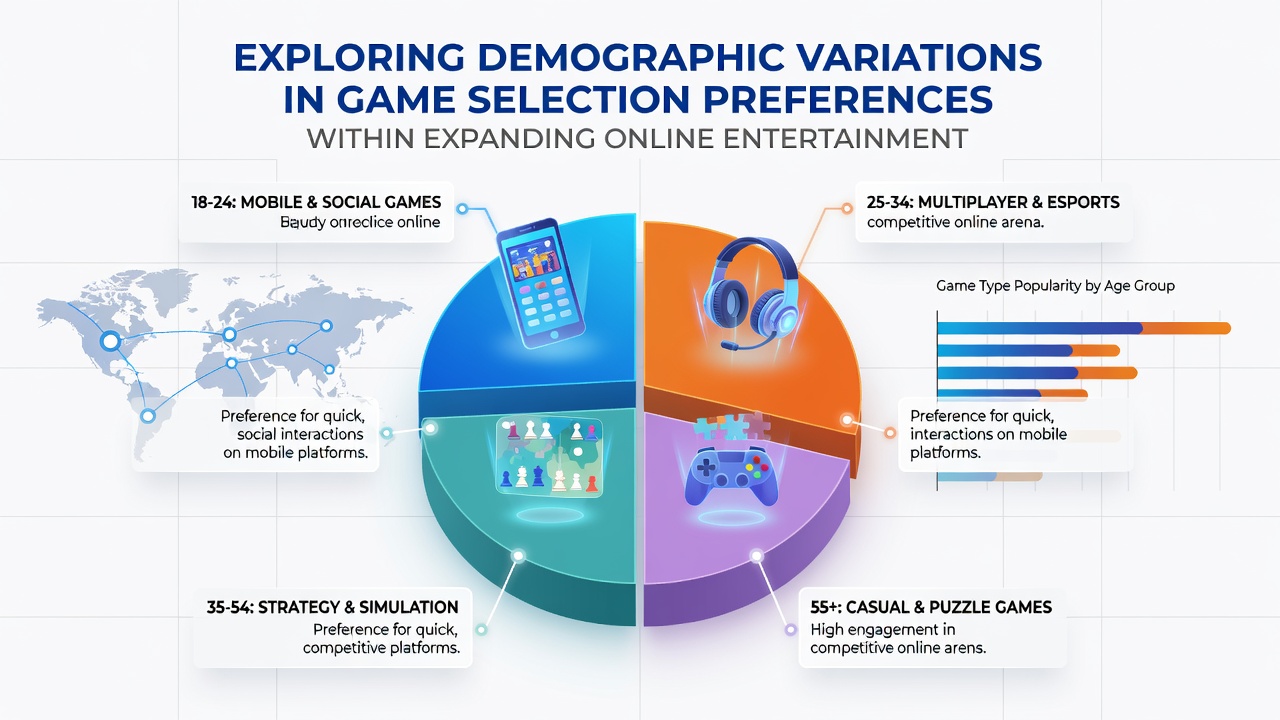
Platform operators adjust content libraries accordingly. Companies serving multiple jurisdictions maintain separate promotional calendars that align with observed demographic clusters, and several have introduced filters that surface recommended titles based on user profiles. Industry reports indicate that such personalization correlates with longer average session durations across tested cohorts.
Device Type Interacts with Demographic Variables
Mobile versus desktop usage further refines the picture. Younger demographics conduct the majority of their activity on smartphones and tablets, which in turn influences preference toward shorter, mobile-optimized experiences such as instant-win and mini-game formats. Older cohorts maintain higher desktop usage rates and select titles that benefit from larger screen real estate for complex interfaces. These device preferences remain stable even as overall mobile penetration rises.
Academic institutions and research organizations have begun publishing longitudinal studies that track these shifts over multiple years. One analysis from the University of Nevada Reno gaming research group documented how preference stability varies by demographic segment, with younger users showing more frequent rotation between genres compared to older groups that maintain consistent selections over time.
Payment method data adds supporting context. Users who rely on digital wallets and cryptocurrency options skew younger and display elevated interest in real-time multiplier games. Traditional banking and card methods appear more frequently among older demographics that favor established table game offerings. Operators monitor these correlations to streamline onboarding flows without altering core game libraries.
Conclusion
Market expansion continues to generate richer datasets that illuminate how demographic factors guide game selection. Operators and researchers alike rely on these patterns to forecast content demand and allocate development resources. As platforms scale across additional jurisdictions through late 2026, ongoing collection of anonymized behavioral metrics will likely refine current understandings of how age, gender, location, income, and device preferences intersect within online entertainment environments.